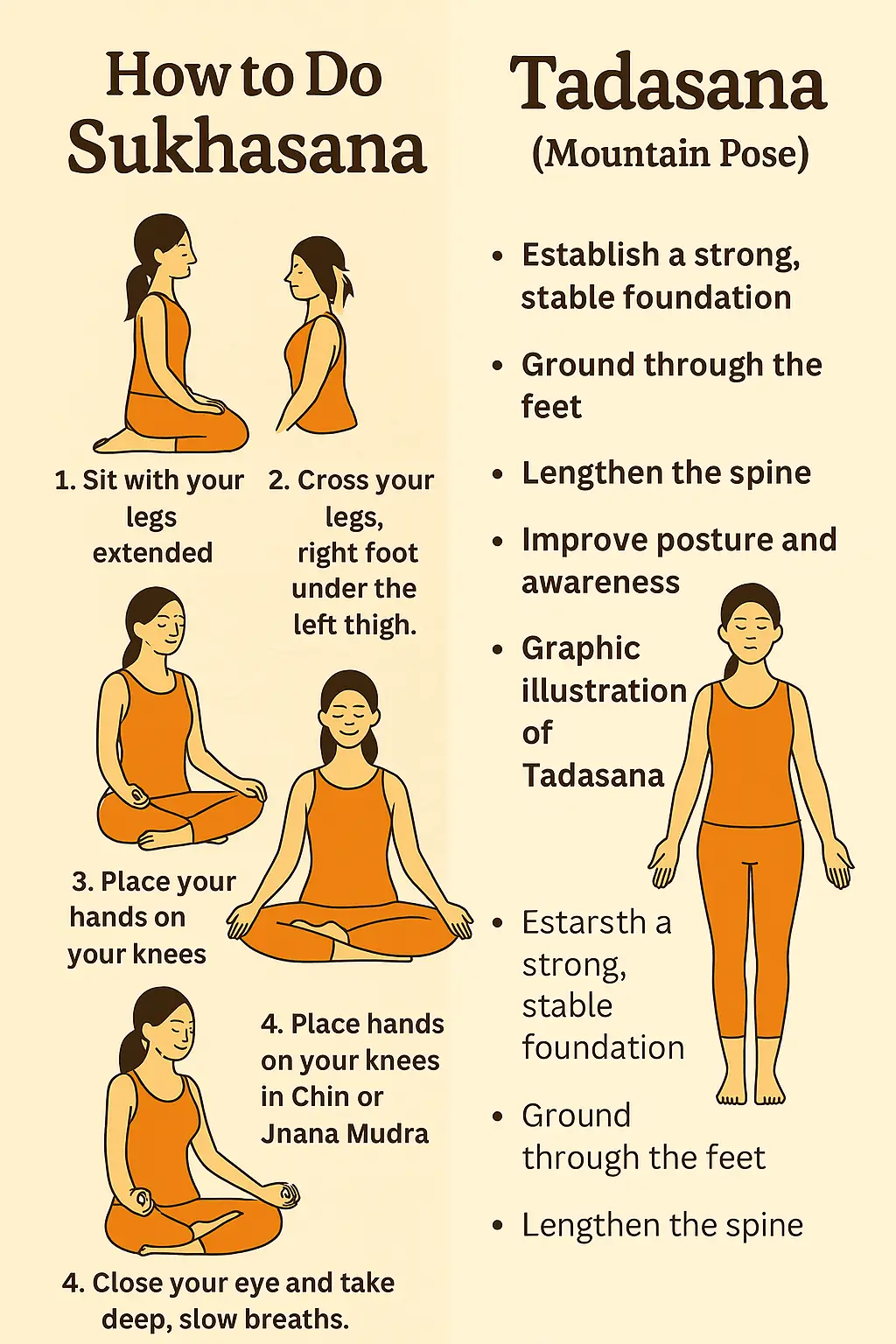
Mountain Pose (Tadasana): A Foundation of Strength and Awareness
Are you practicing yoga to build strength, balance, and awareness? If so, you might be overlooking a fundamental standing pose that lays the groundwork for a successful practice: Tadasana, or Mountain Pose.

This foundational yoga posture is more than just a standing pose; it’s a stance that embodies stability, poise, and inner strength. By mastering Tadasana, you establish a strong foundation for your practice, enhancing your overall physical and mental awareness.
Key Takeaways
- Understand the significance of Mountain Pose in yoga practice.
- Learn how Tadasana improves physical and mental awareness.
- Discover the benefits of incorporating Tadasana into your daily routine.
- Explore the foundational aspects of Tadasana for a stronger practice.
- Enhance your overall yoga experience with this simple yet powerful standing pose.
Understanding Mountain Pose (Tadasana)
In the realm of yoga, Mountain Pose (Tadasana) is considered a cornerstone posture that cultivates alignment and rootedness. This foundational standing pose is more than just a physical stance; it embodies the principles of strength, awareness, and balance that are central to yoga practice.
The Origins and Meaning of Tadasana
Tadasana, or Mountain Pose, has its roots in ancient yoga traditions. The term ‘Tadasana’ is derived from the Sanskrit words ‘Tada,’ meaning mountain, and ‘Asana,’ meaning pose. It is a posture that symbolizes stability, strength, and groundedness, much like a mountain.
Why Mountain Pose Is Fundamental to Yoga Practice
Mountain Pose is fundamental to yoga practice as it teaches proper alignment, engages the core, and promotes balance. It serves as a foundational posture from which various other standing poses are derived, making it an essential part of any yoga routine.
The Symbolism of the Mountain in Yoga Philosophy
In yoga philosophy, the mountain symbolizes steadfastness, strength, and unwavering commitment. Practicing Tadasana is not just about physical alignment but also about cultivating a mental state of stability and focus. It encourages practitioners to be rooted in their practice and in their approach to life.
By understanding and practicing Mountain Pose, you can enhance your overall yoga practice, fostering a deeper connection between body, mind, and spirit.
The Physical and Mental Benefits of Mountain Pose
Tadasana, or Mountain Pose, is a simple yet powerful yoga pose that offers a wide range of benefits for the body and mind. By practicing Mountain Pose, you can experience significant improvements in your overall health and well-being.
Improved Posture and Spinal Alignment
Mountain Pose helps to improve your posture by strengthening your back muscles and increasing your awareness of your spinal alignment. As you stand tall in Tadasana, you are lengthening your spine and promoting good posture, which can reduce the risk of back pain and other musculoskeletal issues.

Strengthening of Core, Legs, and Feet
Practicing Mountain Pose regularly can help strengthen your core, legs, and feet. By engaging your leg muscles and drawing your navel towards your spine, you can improve your overall stability and reduce the risk of injuries.
Enhanced Balance and Stability
Mountain Pose is excellent for improving balance and stability. As you stand in Tadasana, you are training your body to maintain equilibrium, which can enhance your overall physical coordination and reduce the risk of falls.
Mental Clarity and Stress Reduction
In addition to its physical benefits, Mountain Pose can also have a profound impact on your mental well-being. By focusing on your breath and the sensations in your body, you can cultivate mental clarity and reduce stress.
Therapeutic Applications for Common Ailments
Mountain Pose has various therapeutic applications, including alleviating symptoms of common ailments such as lower back pain, sciatica, and anxiety. By practicing Tadasana regularly, you can experience these benefits firsthand and improve your overall quality of life.
How to Perform Mountain Pose Correctly
Mountain Pose, or Tadasana, is a deceptively simple yet powerful yoga posture that requires attention to detail. To practice it effectively, you need to understand the intricacies of alignment and positioning. In this section, we will guide you through the steps to perform Mountain Pose correctly, ensuring you reap its full benefits.
Proper Foot Placement and Lower Body Alignment
Start by standing with your feet hip-width apart, parallel to each other, and facing forward. Your weight should be evenly distributed across both feet. Engage your thigh muscles and lift your kneecaps to strengthen your lower body. Ensure your heels are grounded and your toes are relaxed.

Engaging the Core and Positioning the Torso
Engage your core by drawing your navel towards your spine. This will help stabilize your body and support your lower back. Lengthen your spine, keeping it straight and neutral. Imagine a string pulling your head up towards the ceiling, maintaining the natural curves of your spine.
Proper core engagement is crucial for maintaining balance and stability in Mountain Pose. It also helps in reducing the risk of injury by supporting your spine.
Shoulder, Neck, and Head Alignment
Relax your shoulders, moving them away from your ears. Keep your neck long and your head level, with your chin parallel to the ground. Avoid tilting your head forward or backward. This alignment helps in maintaining a neutral spine and reduces strain on your neck.
Breathing Techniques While in Tadasana
Once you are in Mountain Pose, focus on your breathing. Practice deep, controlled breaths, inhaling through your nose and exhaling through your mouth. This helps in calming your mind and enhancing your focus. Consistent practice of breathing techniques in Tadasana can improve your overall yoga practice.
Common Mistakes and How to Correct Them
Common mistakes in Mountain Pose include letting the shoulders slump, locking the knees, and uneven weight distribution. To correct these, practice regularly, and be mindful of your alignment. Using a mirror or practicing with a yoga instructor can help you identify and correct these mistakes.
Incorporating Mountain Pose Into Your Yoga Practice
As you deepen your yoga practice, incorporating Mountain Pose (Tadasana) can become a foundational element that enhances your overall experience. This pose is not just a static standing position; it’s a dynamic foundation that can be used in various ways to improve your practice.
Using Tadasana as a Reset and Centering Position
Tadasana serves as an excellent reset button during your yoga practice. When you feel off-balance or disconnected, returning to Mountain Pose can help you re-center and refocus. By standing tall in Tadasana, you can realign your body and calm your mind, preparing yourself for the next pose or sequence.

Modifications for Beginners and Those with Limitations
For beginners or those with physical limitations, modifying Mountain Pose can make it more accessible. You can slightly adjust your stance by widening your feet or using support under your heels if you have tight calf muscles. These modifications allow you to still benefit from the pose while accommodating your body’s needs.
Props and Supports to Enhance Your Practice
Using props and supports can significantly enhance your practice of Tadasana. Blocks or straps can help you achieve proper alignment if you’re struggling with flexibility or have certain physical constraints. For instance, placing a block between your thighs can help engage your core and improve your posture.
Progressing From Mountain Pose to Related Standing Postures
Once you’re comfortable in Mountain Pose, you can progress to other standing postures that build upon the foundation established by Tadasana. Poses like Tree Pose (Vrksasana) and Warrior Pose (Virabhadrasana) rely on the strength, balance, and awareness you cultivate in Tadasana. By mastering Mountain Pose, you’ll find it easier to transition into these more complex standing postures.
Conclusion: Embracing the Power of Stillness
As you continue on your yoga journey, Mountain Pose, or Tadasana, remains a foundational element that fosters balance, strength, and awareness. By mastering this yoga posture, you establish a strong foundation for your practice, allowing you to explore more complex poses with confidence.
The benefits of Mountain Pose extend beyond the physical realm, promoting mental clarity and reducing stress. As you cultivate stillness and balance in Tadasana, you can apply these principles to other areas of your life, enhancing your overall well-being.
By incorporating Mountain Pose into your daily routine, you can experience the transformative power of yoga. As you stand tall and strong, you embody the principles of balance and strength, setting yourself up for success on and off the mat.
FAQ
What is Mountain Pose (Tadasana) and why is it considered foundational in yoga?
Mountain Pose, or Tadasana, is a standing yoga pose that serves as the foundation for many other standing poses. It’s considered foundational because it teaches proper alignment, balance, and strength, making it essential for a safe and effective yoga practice.
How does Mountain Pose improve my posture and spinal alignment?
By practicing Mountain Pose, you strengthen your core and improve your posture by aligning your spine, shoulders, and hips. This helps to reduce the risk of back pain and promotes a more confident and upright stance.
Can Mountain Pose help with balance and stability?
Yes, Mountain Pose enhances your balance and stability by engaging your core, improving your proprioception (your body’s ability to sense its position in space), and strengthening your ankles and legs.
Is Mountain Pose beneficial for mental clarity and stress reduction?
Absolutely, Mountain Pose can help calm your mind and reduce stress by encouraging deep, controlled breathing and a focused awareness on your body’s alignment and sensations.
How can I modify Mountain Pose if I have certain limitations or injuries?
You can modify Mountain Pose by using props such as blocks or a wall for support, or by adjusting your stance to accommodate any physical limitations. For example, if you have issues with balance, standing with your feet hip-width apart can be more stable.
What are some common mistakes to avoid when practicing Mountain Pose?
Common mistakes include letting your shoulders roll forward, not engaging your core, and not distributing your weight evenly across your feet. Being mindful of these potential pitfalls can help you practice the pose more effectively.
How can I incorporate Mountain Pose into my daily yoga practice?
You can use Mountain Pose as a starting point for your practice, as a reset position during your practice, or as a standalone pose to cultivate awareness and balance. It’s also a great pose to practice at the beginning of a standing sequence.